


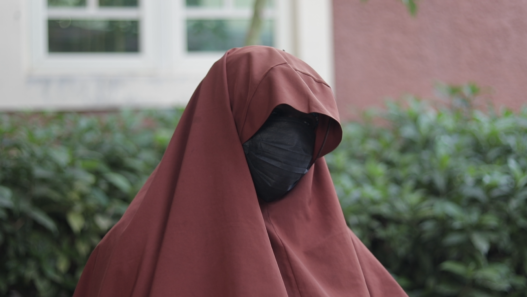

In Nigeria’s conflict-scarred northeast, the war against the armed group Boko Haram has often been told through the stories of soldiers, attacks and territorial battles. Yet, beyond the headlines, thousands of women are fighting quieter wars, battles of trauma, stigma and reintegration after years spent in captivity or within armed groups.
For one woman who once lived inside a settlement controlled by the insurgents, life there was filled with contradictions. As the wife of a senior commander, she recalls a life that was, in her words, unexpectedly “comfortable”. In a community known as Imara, basic needs were available, and religious teachings formed the backbone of daily life. She cared for orphaned children while her husband held a prominent role within the group’s hierarchy.
The group widely known as Boko Haram is formally called Jama’atu Ahlis Sunna Lidda’awati wal-Jihad, an armed movement that emerged in northeastern Nigeria and later became one of the region’s most violent insurgencies. For many civilians trapped within its ranks, daily survival often meant navigating both rigid ideology and the dangers of war.
But the fragile stability inside the settlement eventually shattered. Ideological disagreements split the insurgents into rival factions – the original Boko Haram movement and its offshoot, Islamic State West Africa Province (ISWAP). Attempts to reconcile the factions failed, giving way to internal battles that further deepened the suffering of civilians trapped within their ranks.
The cost of that violence soon became deeply personal. Her eldest daughter was just 12 years old when she was killed during an air strike by the Nigerian Army targeting insurgent positions. Yet leaving the forest was not the end of the conflict; it marked the beginning of a different struggle.
When she eventually returned to her community, she found herself trapped between two worlds. Her relatives feared she might still hold extremist views, while she herself struggled to trust them, having spent years believing that anyone outside her circle was an enemy. The psychological barriers ran deep.
Even when she and others were welcomed by the reintegration organisation led by Hamsatu Allamin, she admitted something unsettling: at the time, they still believed they were capable of harming those helping them. Years of indoctrination had reshaped their worldview so profoundly that ordinary trust felt impossible.
Today, however, she speaks with a different tone – one shaped by reflection and hope. She dreams of returning to school and prays that her children will grow up to help people rather than hurt them. “I want them to wipe away people’s tears,” she says.
For Hajiya Hamsatu, founder of the Allamin Foundation, such transformations are possible but they require patience and a deeper understanding of the social wounds left by the conflict.

Her organisation works with 13 different categories of people affected by the war, including widows of missing men, former detainees and what she calls “invisible children”.
These children are among the least recognised victims of the insurgency. Some were conceived during captivity; others were born in detention facilities. Many mothers do not know who the fathers are, and the children often remain unregistered and unacknowledged by the state.
As Nigerian authorities encourage insurgents and their families to surrender, the challenges of reintegration remain immense. According to Hajiya Hamsatu, some women who return from insurgent-controlled areas may pose serious risks if their ideological beliefs remain intact.
“Sometimes they can be equally dangerous, even more dangerous than the men,” she says, noting that many were deeply radicalised during their years in captivity.
For her, the most critical task is not just rehabilitation but ideological transformation. Without dismantling extremist beliefs, she warns, former captives risk remaining isolated from the communities they return to.
Despite the complexities, Hajiya Hamsatu remains convinced that change is possible.
“No matter how vicious someone has become, they can be transformed back into normal human beings,” she says, advocating for alternative approaches that combine psychological support, community dialogue and long-term reintegration programmes.
In northeast Nigeria, where years of violence have blurred the lines between victim and perpetrator, such efforts reveal a deeper truth: the war is not only fought with guns, but also with ideas.
For women emerging from captivity, peace is not simply about returning home. It is about reclaiming identity, rebuilding trust and confronting the invisible scars left by years of conflict.